In short Measure a piece of clothing you already like, and compare it with the seller's size chart in cm.
Section 1 – Don't just pick your usual size
Many Chinese sellers use Asian sizes, which are often smaller than European ones. The same letter (e.g. L) can also have different measurements from different sellers. Always look at the measurements in cm – not just the letter.
Section 2 – Check what the chart measures
Most size charts list the garment's own measurements, not body measurements. The chest is usually measured straight across, from armpit to armpit with the garment laid flat. Measure your own clothes the same way, and you can compare directly. Occasionally the chest is given as the full circumference – then the number is roughly twice as large (e.g. 110 cm instead of 55 cm).
Section 3 – How to measure your own clothes
Lay the garment flat on a table, smooth it out, and measure in cm:
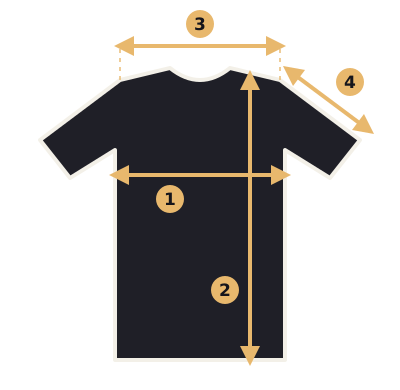
Tops, t-shirts and hoodies
1Chest width – armpit to armpit
2Length – from the top of the shoulder seam to the bottom
3Shoulder width – seam to seam
4Sleeve length – from the shoulder seam to the end of the sleeve
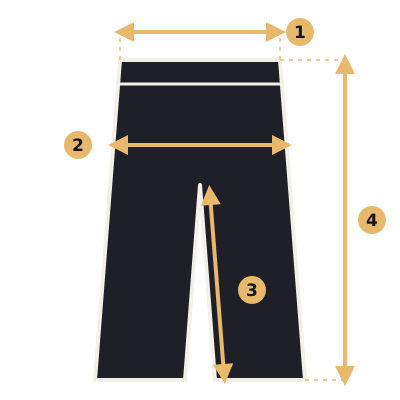
Trousers and shorts
1Waist – laid flat, edge to edge
2Hip – laid flat, at the widest point
3Inseam – from the crotch to the bottom
4Total length – from the waistband to the bottom
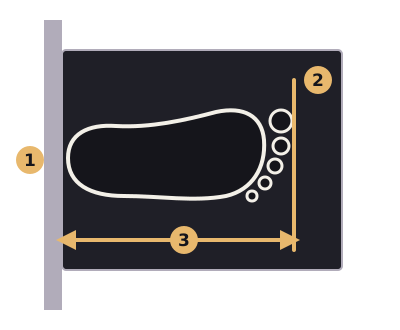
Shoes
1Place your heel against a wall with your foot on a sheet of paper
2Mark where your longest toe ends
3Measure from the wall to the mark – that's your foot length
Compare your measurements with the chart, and choose the size that is closest.
Section 4 – Chinese words in size charts
Chinese
English
尺码
size
胸围
chest width
衣长
length (top)
肩宽
shoulder width
袖长
sleeve length
腰围
waist
臀围
hip
裤长
length (trousers)
Section 5 – When you are unsure
Measurements can typically vary by 1–3 cm, because the garment is measured by hand.
If you are between two sizes, choose based on how the garment should fit – loose or close.
You can write to the seller in the Leave A Message field on the product page (see step 2 in the guide).
If Hipobuy has taken QC photos of the item, they can sometimes show a measuring tape on the garment.
The guide only describes how Hipobuy works according to publicly available information. Read the full terms.